

As fall arrives in North Bend with its crisp air and autumn colors, the local elk herd enters one of the most important and unpredictable times of their year. This is rut season, the breeding period when elk behavior changes and the risks to both human safety and animal welfare increase significantly.

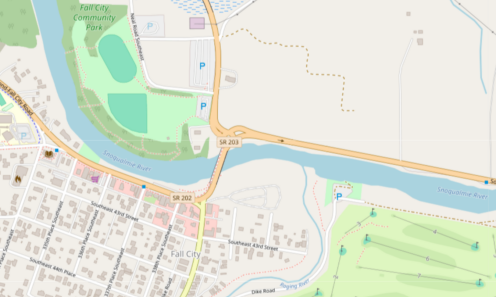
A recent photo surfaced on social media showing people, including a child, advancing on a large group of elk in Meadowbrook along Route 202. For those familiar with elk behavior, this image raised serious concerns. Peak rut season is when elk can be extremely dangerous, and these close encounters highlight how quickly situations can turn risky.

Understanding the Rut
Rut is the term for the mating season when elk reproduce. In Washington State, this period typically begins around the Autumnal Equinox and lasts for about a month, though it can occur anywhere from late August through November, depending on location.
During the rut, elk exhibit behaviors quite different from the rest of the year. Male elk, called bulls, gather females and calves into small groups called harems, which typically range from five to twenty animals, with an average of ten to twelve. Bulls use bugling calls to attract mates, calls that allow females to assess the size and age of potential breeding partners. The bulls then aggressively guard their harems against rival males and may defend them against people as well.
To understand the risks, I consulted with my friend Daryl Ratajczak, a wildlife expert with extensive experience in elk management. Ratajczak served as the Elk Coordinator for the State of Tennessee for 7 years and as Chief of Wildlife and Forestry for 5 years. He also founded Wildlife for You, which offers information and training on wildlife issues through live online classes. His expertise provides valuable insight into how elk behavior changes during breeding season.

According to Ratajczak, during most of the year, an elk would simply run away from humans. However, rut changes everything. During this breeding season, bulls can become overly aggressive and territorial, making them far more dangerous than at other times.
Why Distance Matters
An adult male elk weighs 600 to 800 pounds, while adult cows weigh 400 to 500 pounds. At other times of the year, these large animals would typically flee from people. But during rut, when bulls are defending harems and competing with rival males, called satellite bulls, for breeding opportunities, they may not retreat. Instead, they can be defensive and unpredictable.

According to Ratajczak, the rule of thumb for safe observation is to maintain a minimum distance of 25 yards, though 50 yards is ideal. The City of North Bend recommends keeping back at least 150 feet, approximately the length of two and a half school buses, which aligns with the ideal 50-yard distance. While herds typically hang out at least 300 to 600 feet from field walking paths, people often want to get closer. The best approach is to use zoom cameras or binoculars to observe without disturbing the animals, and to watch for signs that your presence is troubling them. If it is, give them more space.
What to Do in an Emergency
If you find yourself closer to an elk than you should be, stay calm and back away while talking loudly to make your presence known. If an elk charges you, run to the nearest solid object, such as a tree and hide behind it. If knocked down, curl into a ball and protect your head and neck with your arms. The animal is typically trying to scare you off, not seriously harm you, and will likely leave once it perceives the threat has passed.

Ratajczak shared his own close encounter during an elk census late one night. He came across a group in the dark, and when they ran down a short hill, he bugled to see if he could get a callback. Thrilled when he did, he called again, only to be warned by another worker that there was another male much closer. That experience serves as a reminder of how quickly situations can change during rut season.

Protecting the Elk
Beyond maintaining distance, it’s critical to never feed elk. According to the Washington State Department of Fish and Wildlife (WDFW), feeding elk can kill them and disrupt their natural foraging instincts. In fact, the WDFW has recently made it illegal to feed elk, deer, and moose.
This fall, residents have reported seeing people attempting to get close to elk, offering food, and following them. If you witness elk mistreatment, endangerment, or other public-safety issues, you can report them by contacting the WDFW Enforcement Office at (360) 902-2936 or by emailing [email protected]. You can also send a text tip to TIP411 (847411) by typing WDFWTIP followed by a space and your report. For emergencies or illegal activity, contact Snoqualmie-North Bend Police by dialing 9-1-1.
Getting Involved
If you’re interested in learning more about living safely alongside elk, the City of North Bend recommends visiting the WDFW’s elk webpage. You can also learn about and consider supporting the Upper Snoqualmie Valley Elk Management Group, a regional nonprofit that collaborates with many organizations to minimize property damage and public safety risks while managing the elk for recreational, educational, and aesthetic purposes. These purposes include hunting, scientific study, Native American cultural and ceremonial uses, and wildlife viewing and photography.
During rut, the elk can engage in all sorts of fascinating behavior, including bugling, sparring, and mating. It can be quite an interesting sight to witness. Just please keep your distance and let the local wildlife stay wild.
[Featured Image photo credit: Don Detrick]

Comments
I recently literally screamed at a man with a little girl and a toddle to get back as he walked towards the elk. Finally a young man also yelled at him to get back. Many people are not locals. Consequently signs need to be pisted at the grads verges very clearly stating to stay at keast 200 feet away and not allow children less than 300 feet away These people think they aare looking aat bambi when they are really looking at a lethal weapon.
Very timely post. Beautiful to look at but dangerous to approach!
Why is fish and game wardens not writing tickets and enforcing the rules pretty soon someone will get hurt leave the elk alone during rut as they already are stressed out this is what happens when people don’t know anything about wildlife I guess stupid is as stupid does