~ Guest Post by Alexandra Howson
April arrives like someone pulling back curtains. One morning, after months of gray, the light shifts, and suddenly, you can see everything.

I don’t mean this poetically. I mean it literally. The first warm, clear day in the Snoqualmie Valley is elating. You step outside and the air smells different. The cedar scent is sharper. Neighbors you didn’t know you had emerge from their homes with wheelbarrows and loppers. Easter weekend arrives and the whole valley seems to hum with activity.
And then you start to notice: the fence that’s leaning. The beds that need turning. The mulch, the gutters, the hedge that somehow doubled in size while you weren’t looking. What began as elation quietly slides into inventory. The light that felt so welcome now shines harshly on every single task that needs doing.
I feel this every year. Don’t get me wrong, the excitement is real. I want to be outside, I want my hands in dirt, I want to make things grow. But the overwhelm is real too. The project list multiplies faster than I can hold it.
I have to remind myself: I don’t need to do everything at once.

Two ways to see
In Traditional Chinese Medicine, spring belongs to the Wood element, known for the energy of growth, vision, and forward planning. Wood governs the eyes, and not just physically. It shapes our capacity to look ahead, to see what’s possible, to make plans. When Wood energy is healthy, it’s like a young tree: strong in its direction but flexible enough to bend. When it’s rigid, it snaps.
April tests this energy. The season floods us with visual information about all our projects, possibilities, and urgencies. And our instinct is to narrow our focus, make a list, and start conquering. This kind of seeing surely has its place. But there’s also another way to look.
In yoga, drishti is a Sanskrit word meaning gaze or focus. Unlike the productivity-driven focus most of us default to—the kind designed to optimize, execute, get things done—drishti is a practice of limiting the intake of external stimuli. By choosing where to direct your gaze, you preserve and concentrate energy rather than scattering it across everything the light reveals.
Snoqualmie Valley farmers intuitively understand this focus shifting. Right now, Frisky Girl Farm and Steel Wheel Farm are deep into their spring preparations for the Greens to Grains CSA. But this year, preparation has meant adapting to late winter flooding, adjusting their growing plans, responding to what the season actually presented rather than forcing a predetermined schedule. The season sets the pace, not the to-do list.
And Robin Wall Kimmerer writes about this kind of seeing in Braiding Sweetgrass: Indigenous Wisdom, Scientific Knowledge, and the Teachings of Plants. (Find it at The Book Nest in Fall City, an independent bookstore with a storefront and a bookmobile that shows up at community events across the Snoqualmie Valley.) Looking at the natural world as a relationship rather than as a catalog of tasks or resources. Seeing as a reciprocal exchange of attention. That shift, from inventory to relationship, is what drishti offers too.
An outdoor drishti practice
Before you dive into your yard work or garden projects, try this. Step outside and stand still for a moment. Then slowly move your gaze through some drishti focal points. Be playful here!
Look down at the tip of your nose. Then to your hands. Your feet. Slowly turn your gaze far to the right, then far to the left. Look up to the sky. Let your eyes rest at the point between your eyebrows. Breathe softly here in this internal gaze for a moment or two.

This takes maybe two minutes and will settle your nervous system before the doing begins. Instead of stepping outside and immediately scanning for problems, you arrive first. You orient. You choose how to see before you decide what to do.
Try it at the start of a gardening session or standing on your porch with morning coffee. Let it be the threshold between inside and outside.
Permission to pace
The Wood element’s gift isn’t just vision. It’s the flexibility to work with what you see rather than against it. The fence will get fixed. The beds will get turned. The mulch will happen. But not all at once, and not at the expense of actually being present in the season you waited all winter for.
The light is back. You can see everything. The practice is choosing where to look.
-Snoqualmie-based medical writer and yoga teacher Alex Howson, PhD, draws on decades of experience in health education, medical writing, and yoga. Alex explores practical, evidence-based ways to support physical, emotional, and mental well-being through the many seasons of life. Each column blends accessible science, grounded storytelling, and simple tools for building steadiness, resilience, and long-term health in a changing world. You can find Alex on Facebook, Instagram, Linked In and on her website https://www.alexhowson.com/.
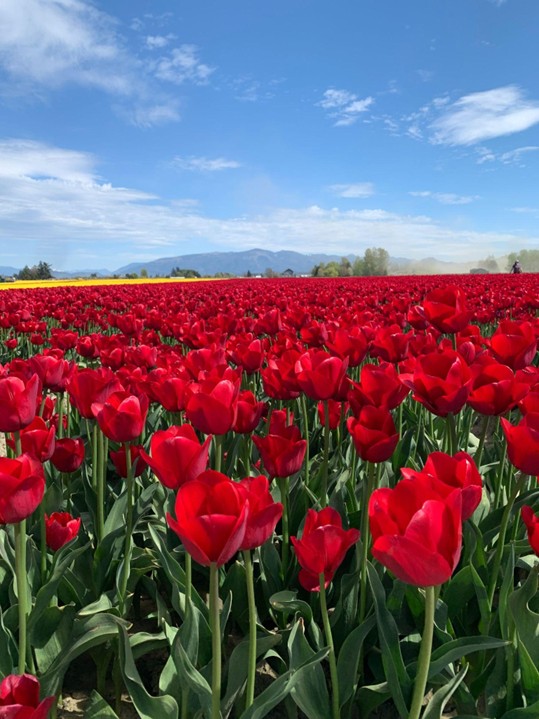
[Featured Image Credit: Alex Howson]