
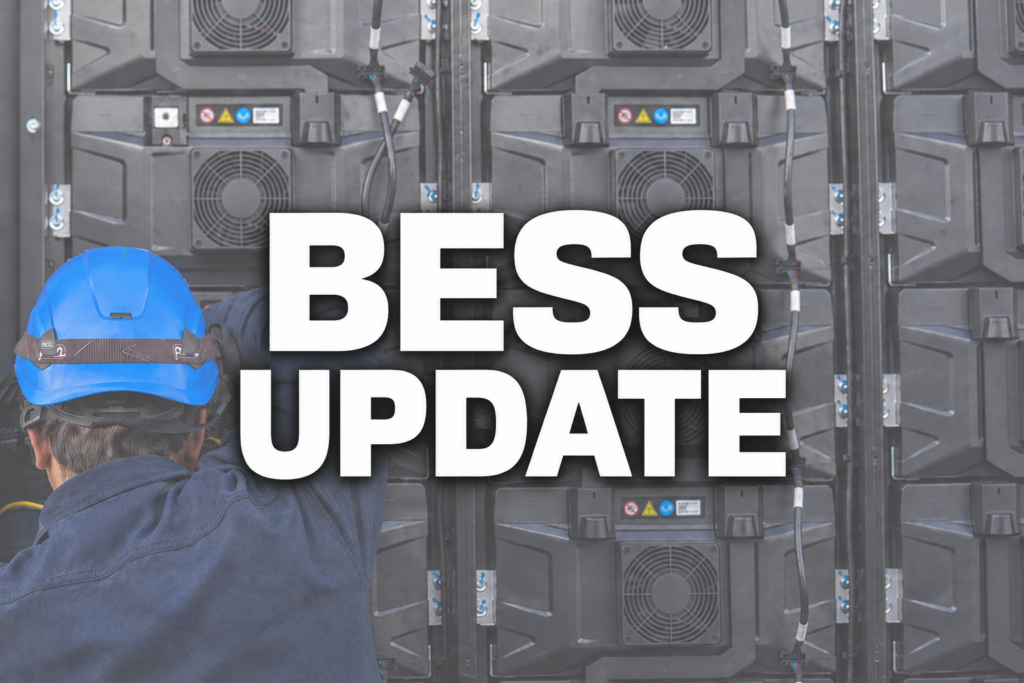
The proposed Cascadia Ridge Battery Energy Storage System (BESS) near Snoqualmie Ridge will enter Washington’s state energy facility siting process, with developer Jupiter Power announcing Wednesday that it plans to seek certification through the Washington State Energy Facility Site Evaluation Council (EFSEC). The move is a significant change of course, signaling Jupiter’s exit from the King County permitting review process it had been pursuing.

The move followed the submission of a letter from Snoqualmie Mayor Mayhew to King County stating that project construction included a connection to a Puget Sound Energy substation that would require work within city-regulated wetlands.
Hence, Mayhew requested that King County recognize Snoqualmie as an “agency with jurisdiction” and make clear to Jupiter that the company was not authorized to do work on that land.

In a statement, Hans Detweiler, vice president of development and lead developer of the Cascadia Ridge project, said the company plans to use the state pathway established for permitting energy facilities in Washington.
“Jupiter Power is planning to pursue site certification for the Cascadia Ridge project through the Washington Energy Facility Site Evaluation Council (EFSEC), the state pathway established by the legislature for permitting much needed energy facilities. The project will help address the energy shortfall in the region, and support Washington’s transition to renewable energy. We will continue collaborating closely with King County and local stakeholders as the process transitions to EFSEC and work to address concerns that may arise.”
According to the City of Snoqualmie, Jupiter’s decision shifts the Cascadia Ridge review from King County to the state level. The EFSEC was created by the Washington Legislature in 1970 as a “one-stop shop” for siting and permitting large energy facilities. Battery storage projects are among the facilities that may voluntarily use the state process instead of local government permitting.
Once an application for site certification is submitted, EFSEC reviews the proposal and makes a recommendation to the governor to approve or deny the project. If approved, the agency oversees the facility through construction, operations, decommissioning and site restoration.
The proposed battery energy storage facility is located directly adjacent to Snoqualmie city limits – and within Snoqualmie’s Urban Growth Area (UGA) – in unincorporated King County. Since becoming a major local issue earlier this year, the proposal has drawn protests from residents, and concern from local governments and the Snoqualmie Valley School District over its location and potential impacts. Snoqualmie and other Valley communities have taken formal steps related to BESS siting, including moratoriums. The city of Snoqualmie also approved funding for outside experts to review the project.
“When our small community asserted its standing in this project, Jupiter turned and ran away to Olympia. Jupiter can change the permitting venue, but it can’t run from the questions our community is asking,” said Snoqualmie City Councilmember Dan Murphy. “Our residents deserve a process that puts their safety and the protection of our natural environment first—not an out of state developer’s profit and convenience.”
Snoqualmie Valley Residents for Energy (SVRE) had previously identified the EFSEC as a possible alternative permitting route for Jupiter in a YouTube video posted before the company’s announcement. The group said that if Jupiter chose that path, it would “take our fight from the county to the state level” and continue pushing for denial of the proposed site.
“We believe that Washington communities asked to host BESS facilities should be at the forefront of these decisions and deserve a seat at the table. Jupiter and PSE are running away from accountability for siting decisions and safety concerns,” said SVRE. “A full environmental review paid for by Jupiter will demonstrate how the Cascadia Ridge site is not appropriate for a lithium-ion BESS. Giving multiple agencies the chance to review and consider once the application is deemed complete gives us hope that siting decisions will be based on the full project scope and impact. SVRE supports a full environmental review and safety analysis, with required approvals from impacted communities and tribal nations before any decision is made.”
The Cascadia Ridge project remains proposed, but its permitting review will now move from the county process to the state-level EFSEC process.

Comments
Say IDGAF about what the community thinks without saying IDGAF about what the community thinks.