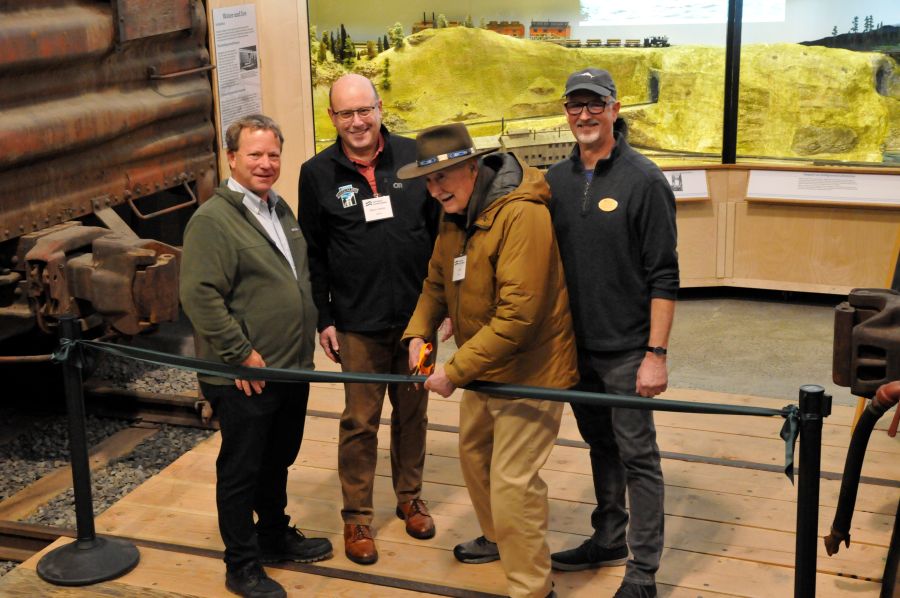
The Northwest Railway Museum Farm, To Rail, To Table exhibit opened to the public on Saturday, Oct. 24, at its Railway History Campus and Train Shed Exhibit Hall in Snoqualmie.

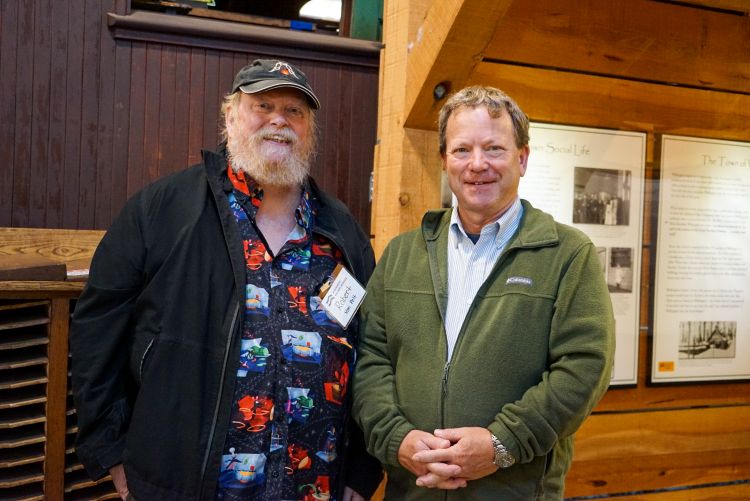
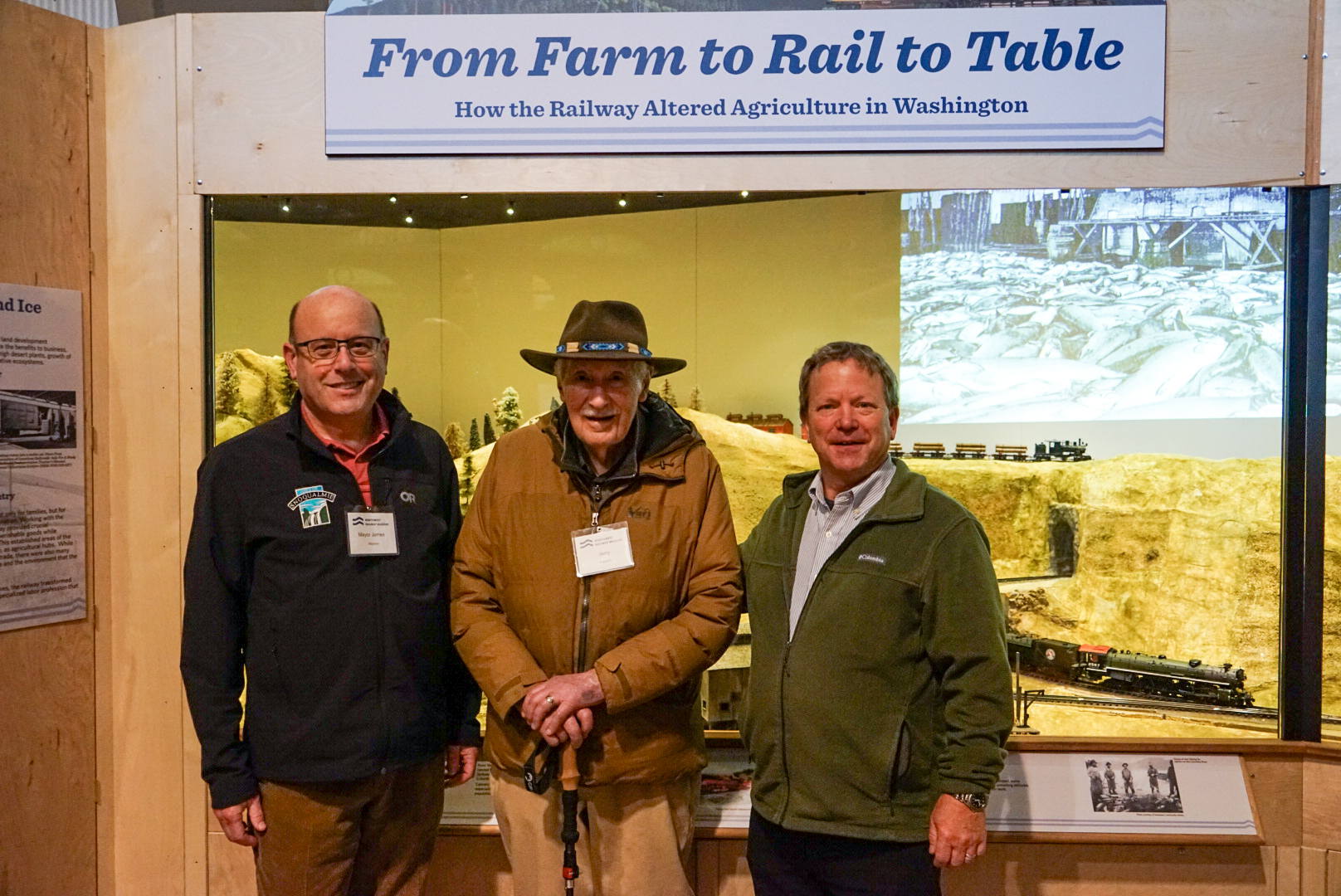
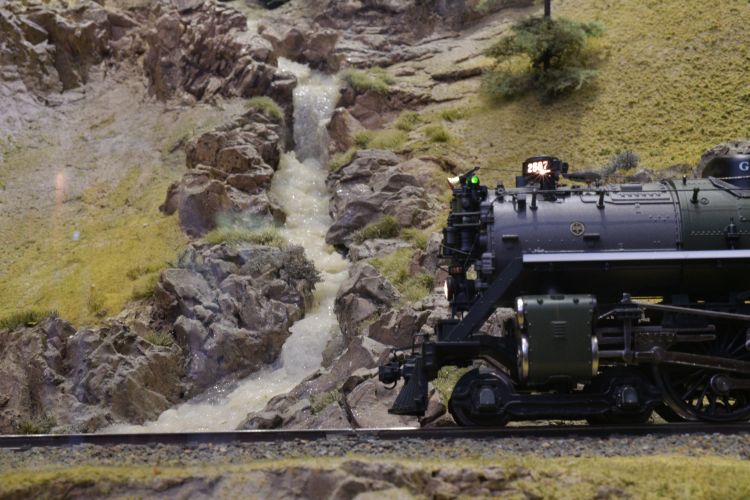
This new exhibit explores how the railway transformed the production of food by revolutionizing how it traveled from farm to table, supporting the communities and industries that shaped the state. A private event was held on Friday, Oct. 23, to honor longtime University of Washington School of Environmental and Forest Sciences professor Dr. Jerry Franklin, who donated his collection of Pacific Northwest model railcars upon which the exhibit is based.
Farm, To Rail, To Table traces the connections among food producers, preservation methods, and the rail networks that brought food to Washington’s growing population and markets beyond the state. Through stories of farming, ranching, fishing, and food processing, visitors will discover how rail service expanded access to markets and helped deliver perishable goods before they spoiled.

Visitors will see the products that traveled the rails, including:
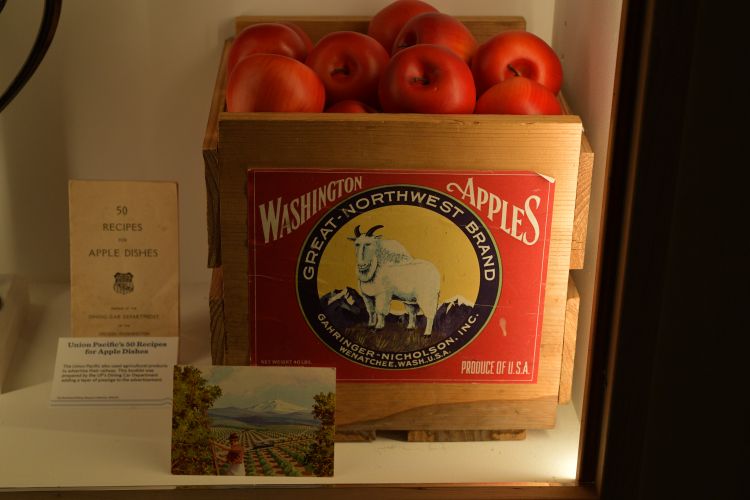
- Apples from the Wenatchee and Yakima valleys, shipped in refrigerated cars to markets far from the orchards where they grew.
- Wheat from the Palouse, hauled from eastern Washington farms to mills and Puget Sound ports.
- Milk and dairy products from valley farms, carried quickly to growing cities where freshness mattered most.
- Cattle and sheep from Washington ranches, raised and cared for by ranchers, then transported in ventilated stock cars to livestock markets and meatpacking facilities. Refrigerated railcars carried processed meat to market, helping supply protein to Washington’s growing communities.
- Salmon from the Columbia River, and southwest Washington canneries, preserved through the work of fishers and cannery crews. Canning made this protein-rich food shelf-stable without refrigeration, while rail connections helped distribute it to communities in Washington and beyond.
- Russet potatoes from irrigated Columbia Basin farms, including Grant County, grown, harvested, and stored for fresh markets and processing into foods such as French fries.
Rail transportation helped connect Washington’s potato industry with distributors and distant markets, while growers and processors supplied food for communities across the state and beyond.
“The Northwest Railway Museum is grateful to Jerry for sharing his model collection with the Museum, and we look forward to sharing this story with thousands of families, students, and adults, especially those curious about Washington State history,” said Richard Anderson, the Museum’s Executive Director.
Visitor Information

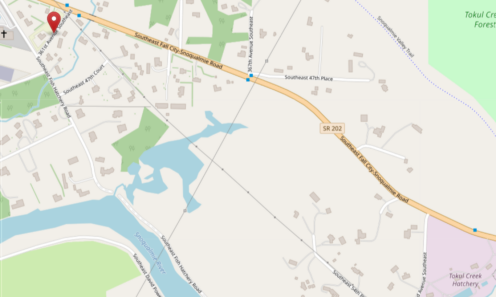
- Where: Northwest Railway Museum Railway History Campus & Train Shed Exhibit Hall, 9320 Stone Quarry Road, Snoqualmie, WA 98065
- When: April – December: Wednesdays – Mondays, 11 a.m.-4 p.m. | January 23 – March: Fridays- Mondays, 11 a.m.-4 p.m.
- Admission: $5-$10 per person, with free admission Wednesdays, April – December
*About the Northwest Railway Museum
The Northwest Railway Museum is a private nonprofit organization located in Snoqualmie and North Bend, Washington. It operates a nationally significant museum and heritage railway where the public experiences captivating exhibits and educational programs that confront the impactful and challenging history of railways in shaping the Pacific Northwest, while actively engaging the community and inspiring future generations to preserve this transformative heritage
As it approaches its 70th anniversary in 2027, the Museum now welcomes more than 200,000 annual visitors. Through its historic Snoqualmie Depot, Railway History Campus, Train Shed Exhibit Hall, and heritage train excursions between North Bend and Snoqualmie Falls, the Museum connects audiences with the region’s transportation, industrial, and community heritage.
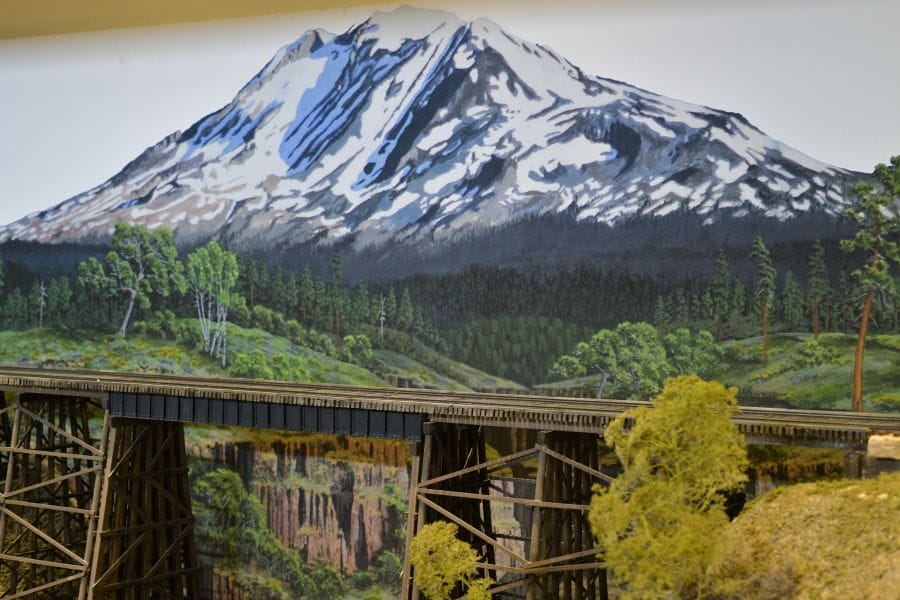
[Featured Image: Mt. Adams illustrated by UW Forest Ecology Professor Robert Van Pelt]