~Guest Post by the Snoqualmie Valley Historical Museum
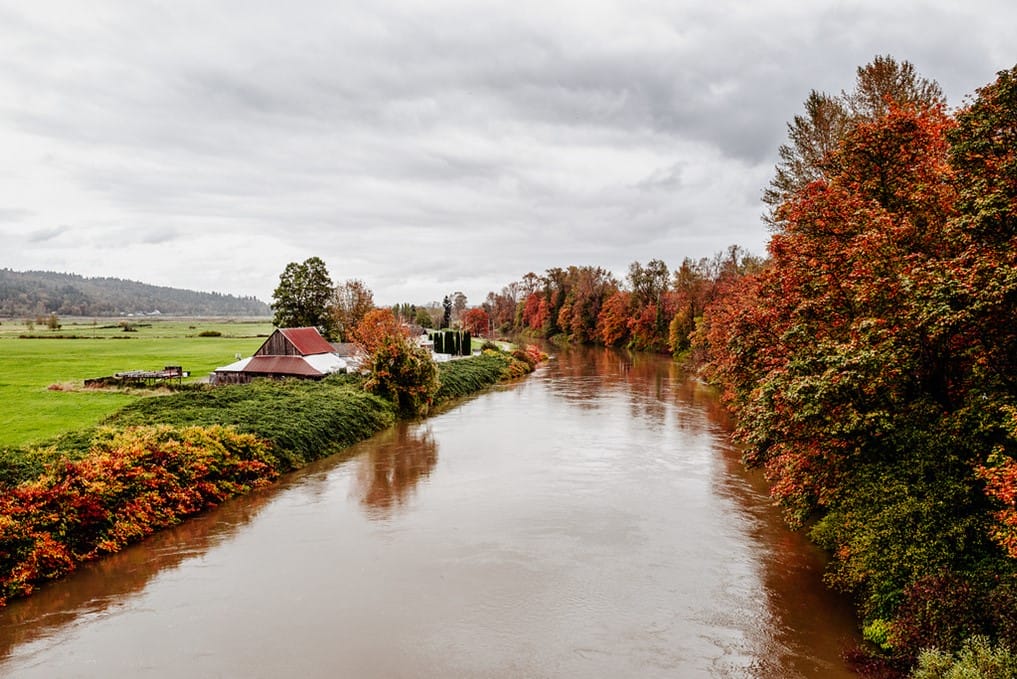
Today, the Snoqualmie Valley Trail is a popular place to walk, run, bike, ride horses, and enjoy the Valley’s forests, rivers, wetlands, and farmland.

But beneath your feet is something much older than a recreational trail.
Much of the Snoqualmie Valley Trail follows the route of the former Milwaukee Road railroad. The railroad once carried passengers, farmers, loggers, workers, and freight through the Valley, connecting its communities with Seattle and the rest of the region.
The Snoqualmie Valley Museum is working to build on that history by developing the Snoqualmie Valley Heritage Trail—a journey that connects the existing trail with the historic places, people, and stories that shaped the Valley.
The goal is simple: to help people see the history that is already around them.
A Route That Predates the Railroad
The story begins long before the railroad.
The Snoqualmie Valley is the homeland of the Snoqualmie Tribe, and the Valley’s rivers, prairies, forests, and mountains have supported human life for thousands of years.
Native trails connected communities and resource-gathering areas throughout the Valley and across the Cascades. Later, Euro-American settlers followed some of these routes as they explored and developed the region.
The Snoqualmie Wagon Road, established in the nineteenth century, became an important route between Puget Sound and the eastern side of the Cascades. Cattle, agricultural products, miners, travelers, and supplies moved along the road.
The Valley was already a transportation corridor before the railroad arrived.
The Railroad Changed the Valley
In the late nineteenth and early twentieth centuries, railroads transformed the Valley.
The Seattle, Lake Shore and Eastern Railway reached the upper Snoqualmie Valley in 1888–1889. It connected farms, mills, mines, and communities with Seattle, dramatically reducing travel time and making it much easier to move people and products.
The railroad helped fuel the Valley’s agricultural and timber industries. Lumber could be shipped out. Farm products could reach urban markets. Machinery and supplies could come in.
Towns grew around the railroad.
Then, in the early twentieth century, the Milwaukee Road built additional rail lines through the Valley. Its Everett Branch connected Cedar Falls with communities to the north, including Duvall and Monroe.
Much of today’s Snoqualmie Valley Trail follows this former Milwaukee Road corridor.
When you walk or ride the trail today, you are often traveling along the same carefully engineered route that railroad workers constructed more than a century ago.
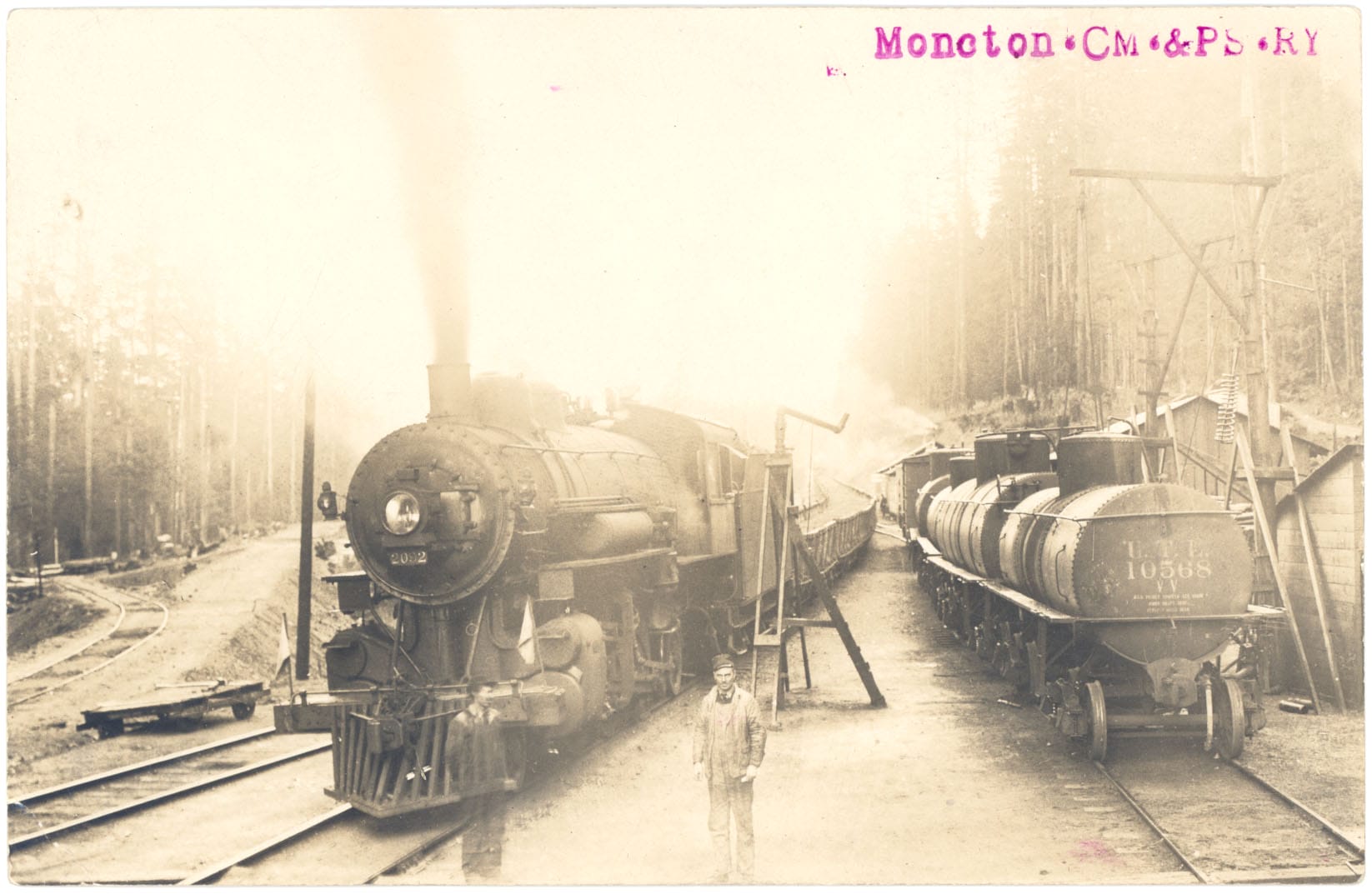
A Railroad Through a Working Landscape
The railroad did not pass through an empty landscape.
It traveled through farms, forests, wetlands, rivers, and communities.
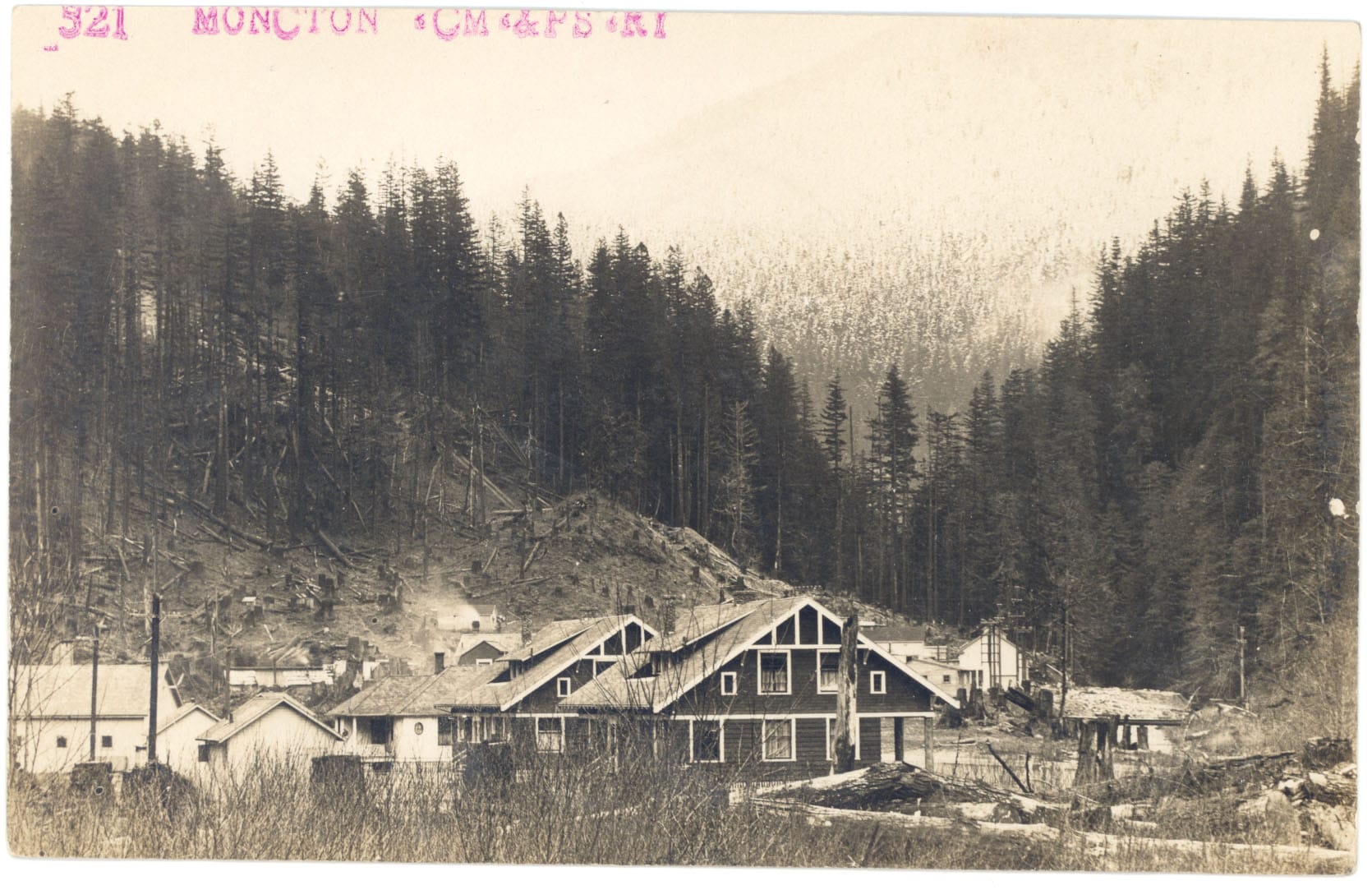
In the southern Valley, the route passed through areas associated with logging and the enormous timber industry. Near Snoqualmie, the railroad connected with the Snoqualmie Falls Lumber Company and its company town at Meadowbrook.
Farther north, the railroad traveled through some of the Valley’s richest agricultural country.
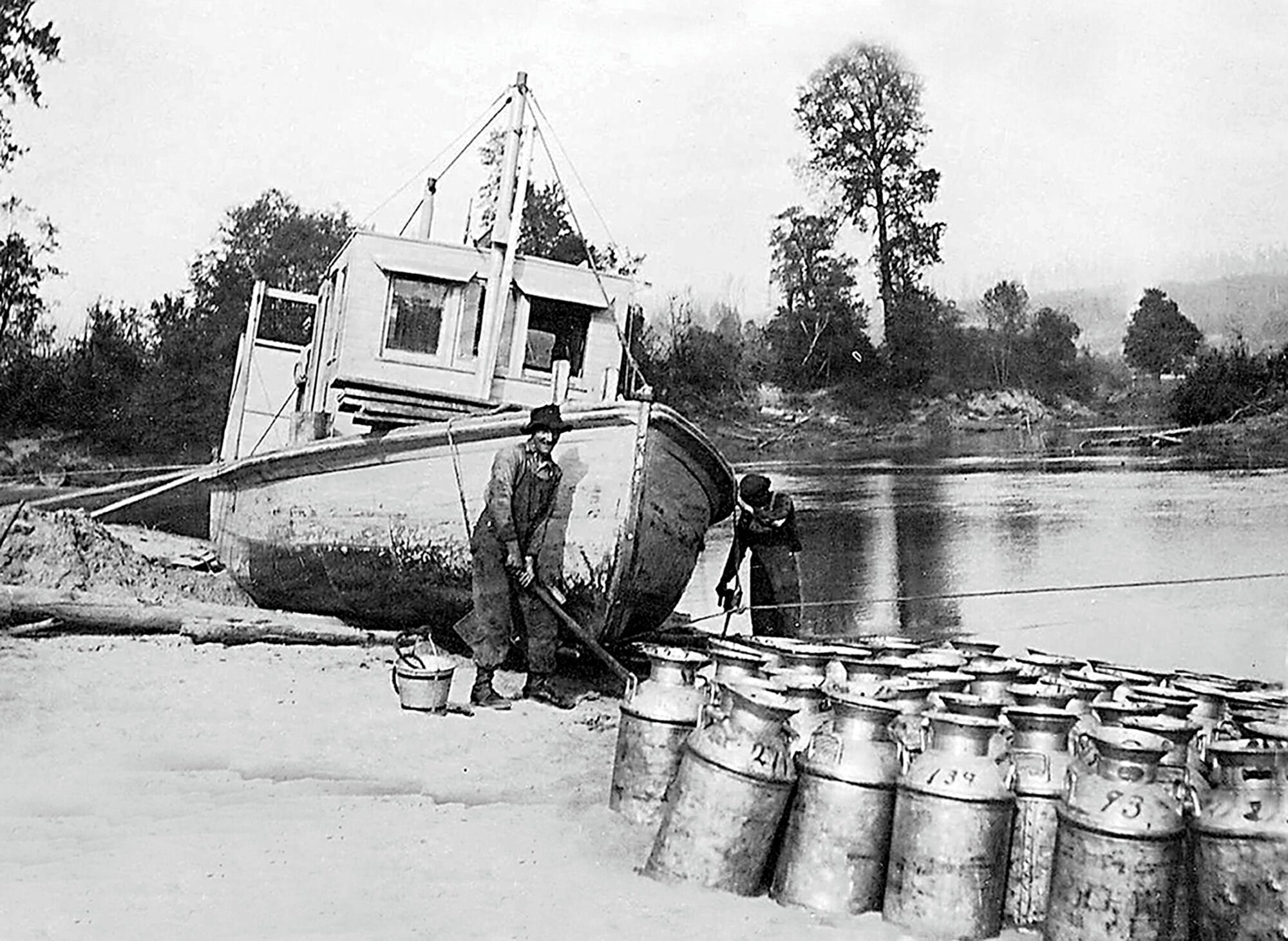
The tracks carried milk, livestock, hay, crops, lumber, and other products. They also carried the people who worked on farms and in mills and businesses.
The railroad was essentially the Valley’s circulatory system.
Towns Along the Line

One of the remarkable things about the trail is how many historic communities it connects.
At Duvall, the railroad helped transform a small settlement into a commercial center. Historic buildings and the former depot remain reminders of that era.
A visitor might begin in Duvall, encounter the agricultural history of the Valley, continue toward Carnation and learn about dairying, explore Fall City’s early settlement and milling history, visit Snoqualmie and its railroad and lumber history, and continue toward North Bend and the mountain landscape.
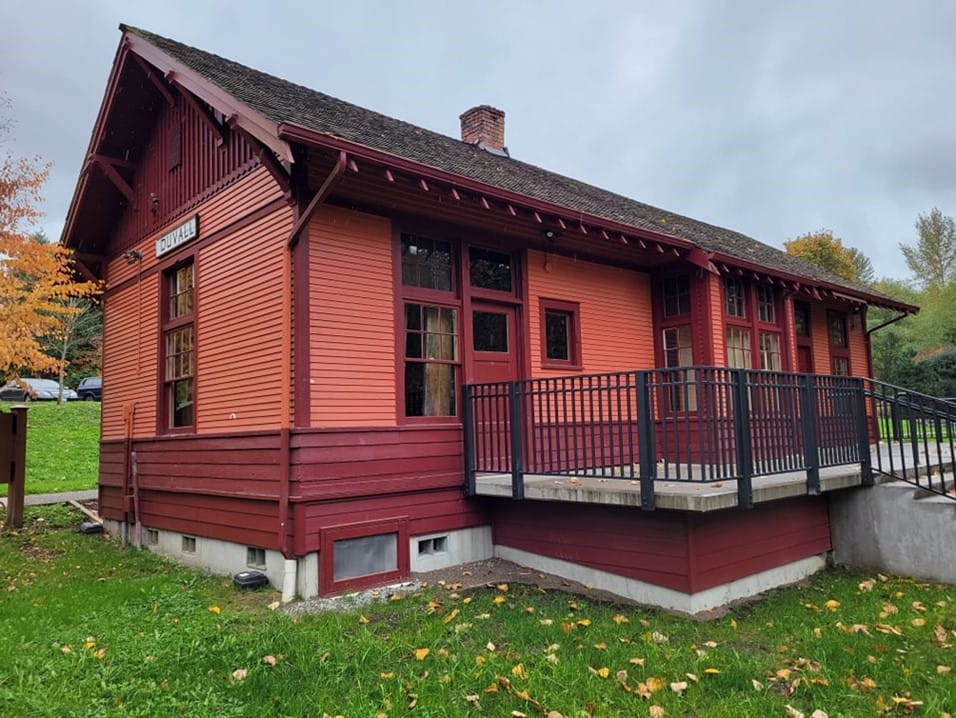
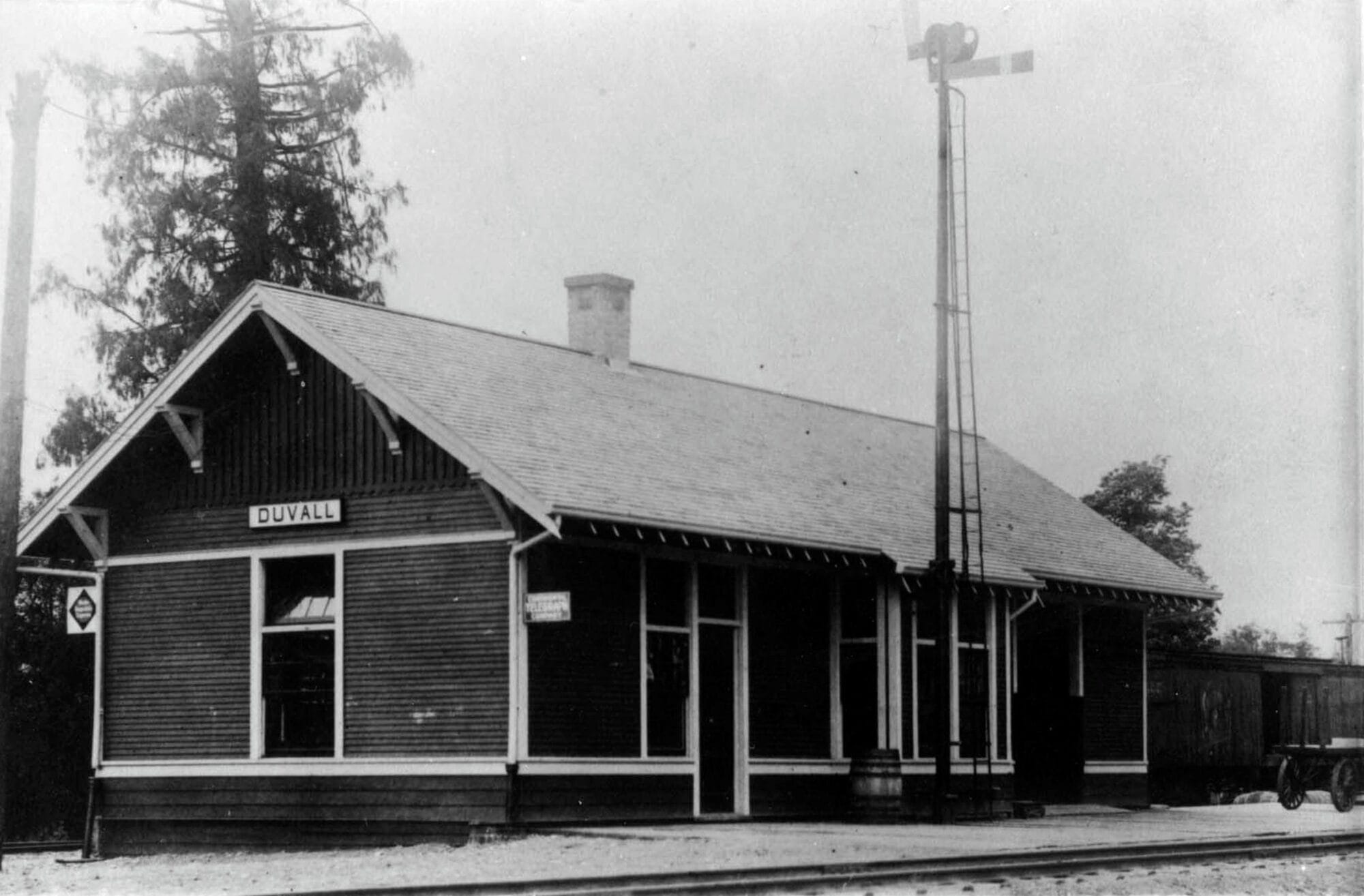
At Carnation, the railroad helped support a community increasingly associated with dairying and agriculture.
At Fall City, the route connects with a community whose history is tied to the Snoqualmie River, early settlement, milling, farming, and transportation.
Near Snoqualmie, the railroad became inseparable from the lumber industry. The historic downtown and depot preserve the memory of a town that grew rapidly after the railroad arrived.
And at North Bend, the railroad helped establish the community as an important gateway to the mountains.
The trail therefore does something remarkable: it connects several communities that developed in different ways while sharing the same transportation network.
The Landscape Tells the Story
One of the Museum’s goals for the Heritage Trail is to help visitors understand that history does not exist only inside museums.
It is visible in the landscape.
A broad grassy field may be a historic farm.
A line of trees may follow an old railroad grade.
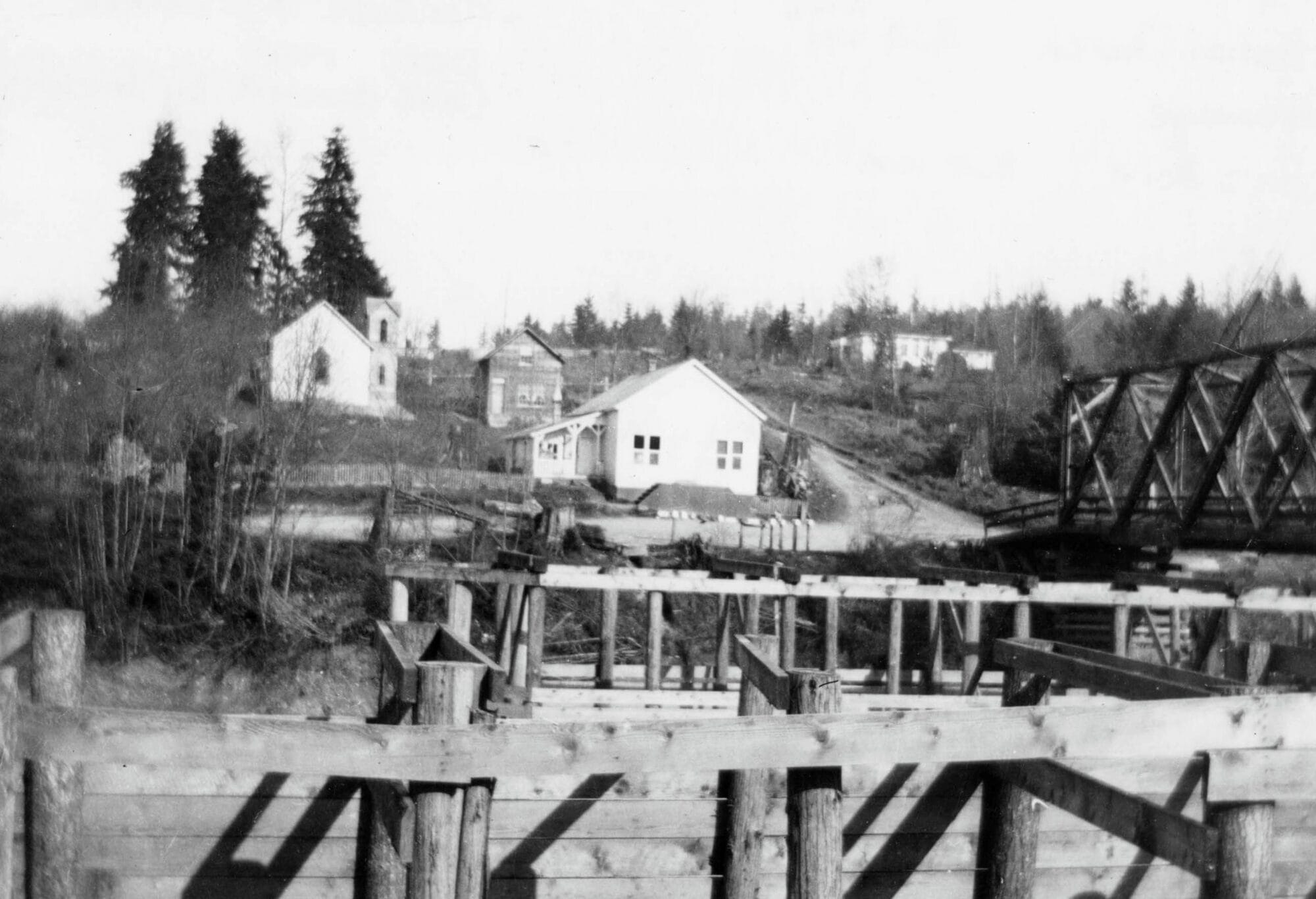
A bridge or trestle site may reveal how trains crossed a river or creek.
A downtown building may have been built because the railroad brought customers and commerce.
A former mill pond may be evidence of an enormous industrial complex.
The Snoqualmie Valley Trail passes through many of these landscapes.
King County describes the existing trail as following a former railroad corridor through family farms, open space, and natural areas. Today, points of interest along the route include Tolt-MacDonald Park, Meadowbrook Farm, Three Forks Natural Area, and the Tokul Trestle.
From Railroad Trail to Heritage Trail
The Museum’s vision goes beyond simply telling the story of the railroad.
The Snoqualmie Valley Heritage Trail follows portions of the existing Snoqualmie Valley Trail but also connects it with historic sites and corridors that tell a broader story of the Valley.
The planned heritage experience can connect visitors with thousands of years of history—from the Snoqualmie people’s relationship with the land, to homesteading, farming, logging, railroads, industry, and the communities that developed along these routes.
The railroad may be gone, but the route—and the stories carried along it—are still here.
The trail becomes a kind of outdoor museum.
History You Can Experience
That is what makes a heritage trail different from a history book.
You can stand where a railroad once carried a train.
You can look across the same agricultural landscape that farmers worked generations ago.
You can see the rivers that shaped settlement and industry.

You can walk beneath the mountains that drew miners, loggers, travelers, and tourists.
And you can experience the distances that shaped people’s lives.
The trail allows us to ask questions that are difficult to answer inside a gallery:
Why was this town built here?
Why did the railroad take this route?
Why were farms located in this particular landscape?
How did people get their products to market?
Where did the workers live?
What was here before the railroad?
Those questions turn a recreational outing into an exploration of history.
Preserving the Stories Along the Way
The Snoqualmie Valley Museum’s mission is to collect, preserve, and share the history of the Valley so that present and future generations can understand its past.
The Heritage Trail is an opportunity to take that mission outside the Museum’s walls.
Rather than asking people to come to one building to learn about Valley history, the Museum can help people experience that history where it happened.
Interpretive signs, digital resources, photographs, maps, stories, and historic markers can help reveal the layers of history along the route.
And because the trail connects communities from Duvall to North Bend, it can tell a Valley-wide story rather than focusing on the history of any one town.
The Trail We Have Today Is Part of the Story
The railroad is gone from most of this route.
But its grade remains.
The farms remain.
The rivers remain.
The mountains remain.
Many of the communities remain.
And the stories remain.
The Snoqualmie Valley Heritage Trail is an opportunity to bring those pieces together—to transform a beautiful recreational corridor into a place where people can understand how the Valley became the place it is today.
Next time you walk or bike the Snoqualmie Valley Trail, remember that you are not simply following a path through the countryside.
You are following an old transportation corridor through a landscape shaped by thousands of years of human history.
Learn more at http://snoqualmievalleymuseum.org/heritagetrail or download a map here.