
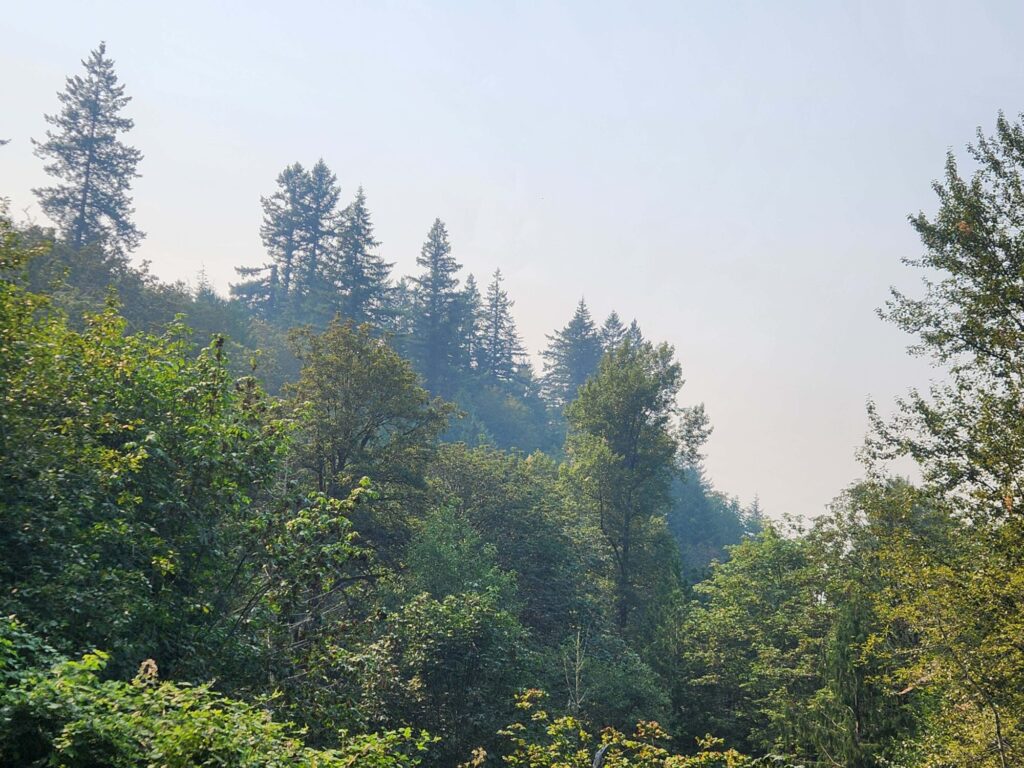
As wildfire smoke moves into the region and temperatures climb, cities throughout the Snoqualmie Valley are opening cooling centers and canceling events as air quality deteriorates. Cooling options are available starting today, with the National Weather Service forecasting unhealthy air quality conditions through Wednesday and potentially into Thursday, before temperatures cool this weekend.

The Puget Sound Clean Air Agency and National Weather Service have issued an air quality alert for the entire region. On Monday, August 3, particulate matter (PM2.5) concentrations may reach Unhealthy for Sensitive Groups levels.
Smoke moved in today, August 4th, with air quality expected to reach Unhealthy and remain through Wednesday, August 5th, potentially moving into Thursday, August 6th.
Cooling and Relief Centers

Cooling options are available starting today for residents seeking relief from the heat and smoke:
- Snoqualmie City Hall, Council Chambers, 38624 SE River St, Wednesday 8/5 from 9 a.m. – 6 p.m.
- Snoqualmie Fire Department Community Room, 37600 Snoqualmie Pkwy, Wednesday 8/5 from 9 a.m. – 8 p.m.
- Snoqualmie Valley YMCA, 35018 SE Ridge St., Wednesday 8/5 from 6 a.m. – 9 p.m.
- Reclaim, 8224 Railroad Avenue SE, Tuesday through Friday from 8:30 a.m. to 4:00 p.m.
Events and Health
The worsening conditions have prompted event cancellations and relocations across the valley. Snoqualmie has canceled National Night Out scheduled for tonight, on the Ridge, due to deteriorating air quality conditions.

Carnation has relocated its National Night Out to Tolt Middle School at 3740 Tolt Avenue to allow the event to proceed indoors, where residents can enjoy firetrucks, hot dogs, games, face paint, live music, vendors, and a free soccer ball giveaway. Bounce houses and the bike track activity have been rescheduled to the Carnation Cool Down event at Tolt Commons on August 21st.
Wildfire smoke can cause and worsen many health problems including asthma attacks, chest pain, coughing, fast heartbeat, headaches, irritated sinuses, stinging eyes, and trouble breathing.
Everyone should take precautions to protect their health during this smoke event, with special attention needed for vulnerable groups. Infants, children, and people over 65, or those who are pregnant, have heart or lung diseases such as asthma or COPD, respiratory infections, diabetes, or are stroke survivors should be especially careful:
- Stay at home when possible. If you cannot stay cool at home or are especially sensitive to smoke, seek shelter elsewhere.
- Limit strenuous outdoor activity, especially during midday heat. Sensitive groups including older adults, children and teens, and those with heart or lung conditions should avoid outdoor exertion while air quality is poor.
- Stay hydrated, seek shade, and wear light, loose-fitting clothing.
- Never leave people or pets in a parked car.
- Check on neighbors and elderly family members.
- Keep pets indoors during poor air quality, and watch for hot pavement on walks.
- If possible, close windows in your home to keep the indoor air clean. If you have an air conditioner, use it in recirculation mode.
- Make sure your home ventilation system is maintained following manufacturer recommendations, like replacing filters regularly. Do not contribute to indoor air pollution such as burning candles or vacuuming. Use a portable air cleaner if available.
- If you do not have an air conditioner, consider finding a public place with clean, air-conditioned indoor air like City Hall, a mall, public library, or community center. Call ahead to make sure they have air conditioning.
- If it becomes unbearably hot in your home, it is better to open the windows for a short period of time.
- Masks with the label “N95” or “N100”, when worn correctly, are effective at reducing exposure to smoke pollution. Other face coverings and poorly fitting masks typically offer little protection from inhaling smoke. Check with your doctor to see if this is appropriate for you.
- Pay attention to symptoms that you or those you are caring for are experiencing and take the above steps to reduce exposures at lower smoke levels if needed.

The Snoqualmie River can look inviting during hot weather, but it is dangerous even on hot days with risks such as cold-water shock, strong currents, and submerged logs and rocks. Consider the Snoqualmie Community Park Splash Pad as a cooling-off alternative—hours are 10 a.m. to 8 p.m.
Check with your health care provider for more specific health questions and concerns. As always, seek medical attention if symptoms are serious. For more information on ways to reduce exposure to smoke, visit the Washington Department of Health’s Smoke from Fire tips. Air quality conditions may change quickly—check the air quality forecast regularly at the Puget Sound Clean Air Agency website.
Follow heat and other weather updates by visiting the National Weather Service website. Stay updated with emergency news and air quality updates at www.kcemergency.com.
[Information provided by the cities of Snoqualmie, North Bend and Carnation]


Comments
It smokes a little when its idleing but Ima gonna crank the AC in my F350 Diesel and sleep in there.