
~Guest Post by the Snoqualmie Valley Historical Museum
Today, it is easy to think of the Snoqualmie Valley as a place of farms, forests, rivers, and small towns. But beginning in the nineteenth century, the Valley became the setting for a remarkably diverse industrial economy.

Timber, minerals, water, and transportation all played a role. Industries brought workers and investment, created towns, built railroads, and transformed the landscape. For generations, the Valley’s economic life was closely tied to the forests and rivers surrounding it.
The First Mills
Logging began on a small scale soon after Euro-American settlement.
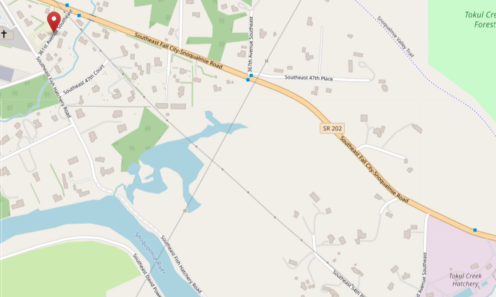
In 1873, Watson Allen established a water-powered sawmill on Tokul Creek near what became Fall City. A dam and millrace directed water to power the mill, which produced squared timbers and other lumber products. Local Native workers were among those involved in the operation.
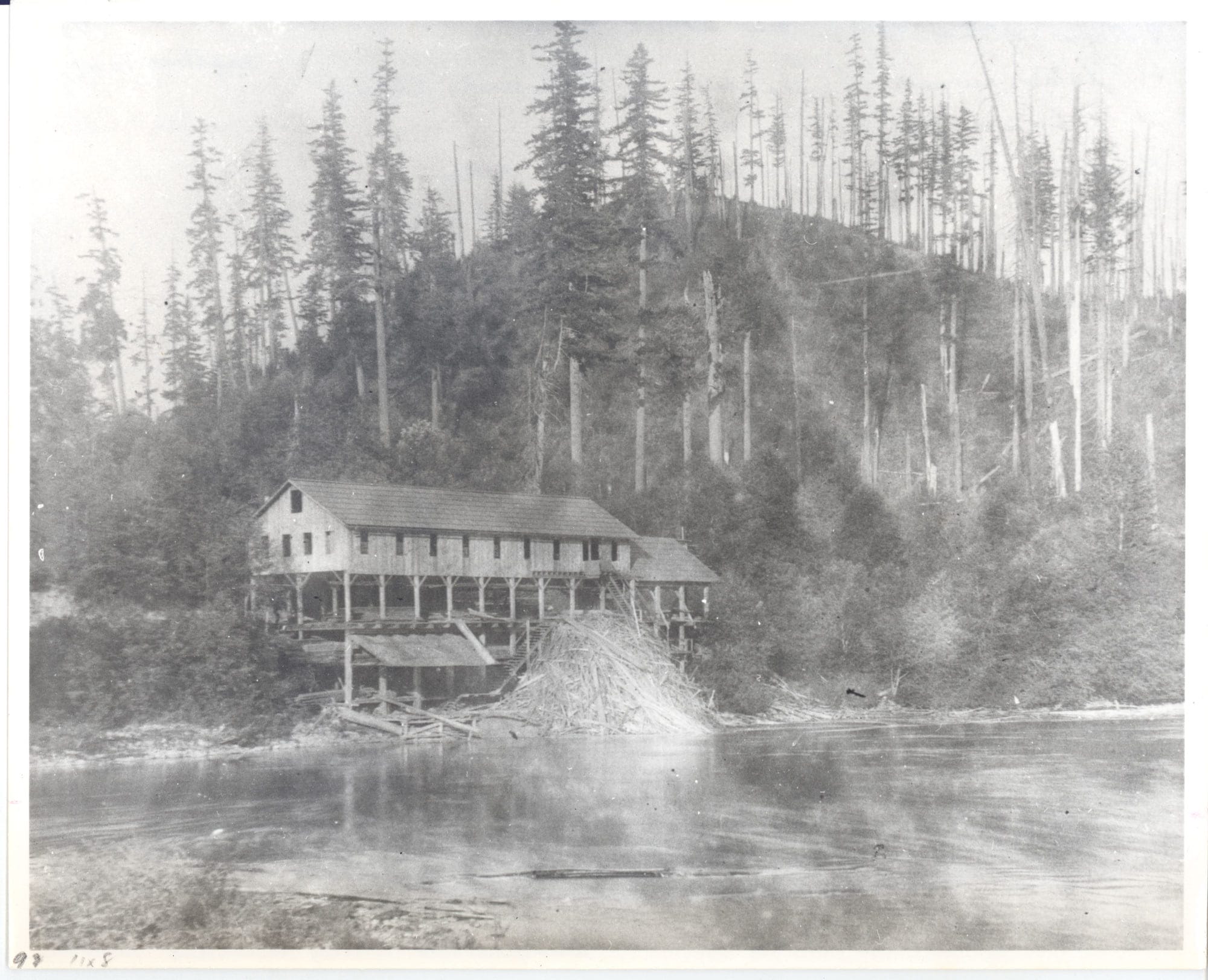
Other small mills soon followed. By the late 1870s, numerous logging operations were working along the Snoqualmie River, and logs were being floated downstream toward markets on Puget Sound.
The forests seemed almost limitless. But getting timber from the mountains to market was difficult. Logs had to be hauled by animals, floated down rivers, or moved over rough roads.
The arrival of the railroad changed everything.
Railroads Open the Forest
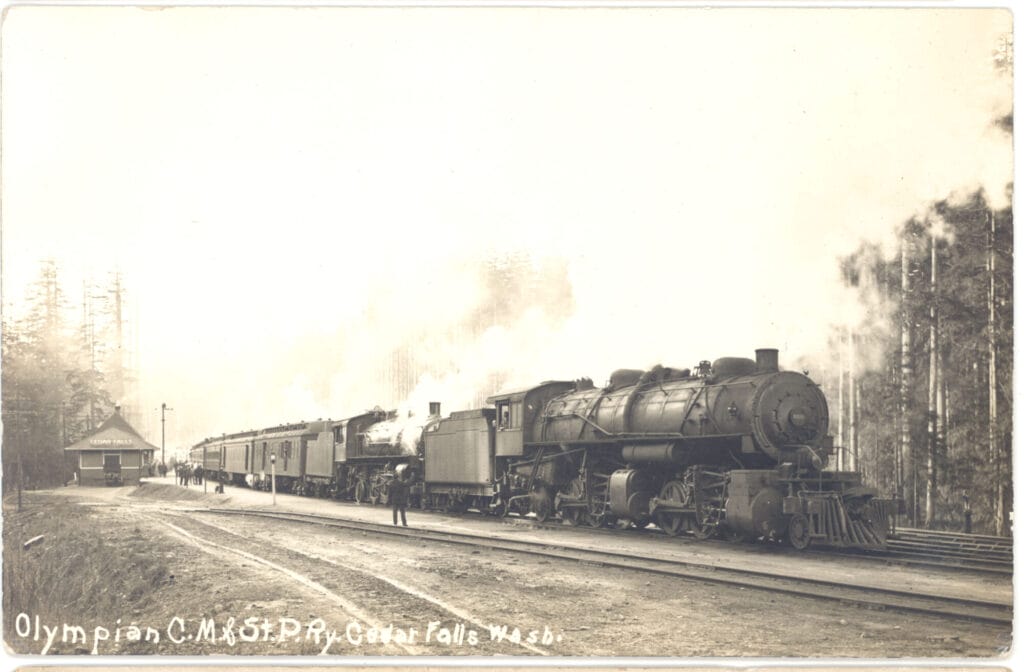
The Seattle, Lake Shore and Eastern Railroad reached the Snoqualmie Valley in the late 1880s, opening a new era of industrial development.
Railroads did more than bring passengers and settlers. They provided a way to move enormous quantities of lumber, equipment, and supplies. They also made previously inaccessible forests commercially valuable.
Logging expanded rapidly up the Snoqualmie River and into the surrounding mountains. Logging railroads eventually extended into the forests, allowing companies to reach timber that could never have been economically hauled by wagon.
Small sawmills and shingle mills appeared throughout the region, while larger companies began acquiring enormous tracts of timberland.
The landscape was changing rapidly.
Trees became lumber, shingles, railroad ties, and other products that were shipped throughout the country. Cut-over land could then be cleared for farms or eventually used for other development.
Mining in the Mountains
Timber was not the Valley’s only natural resource.

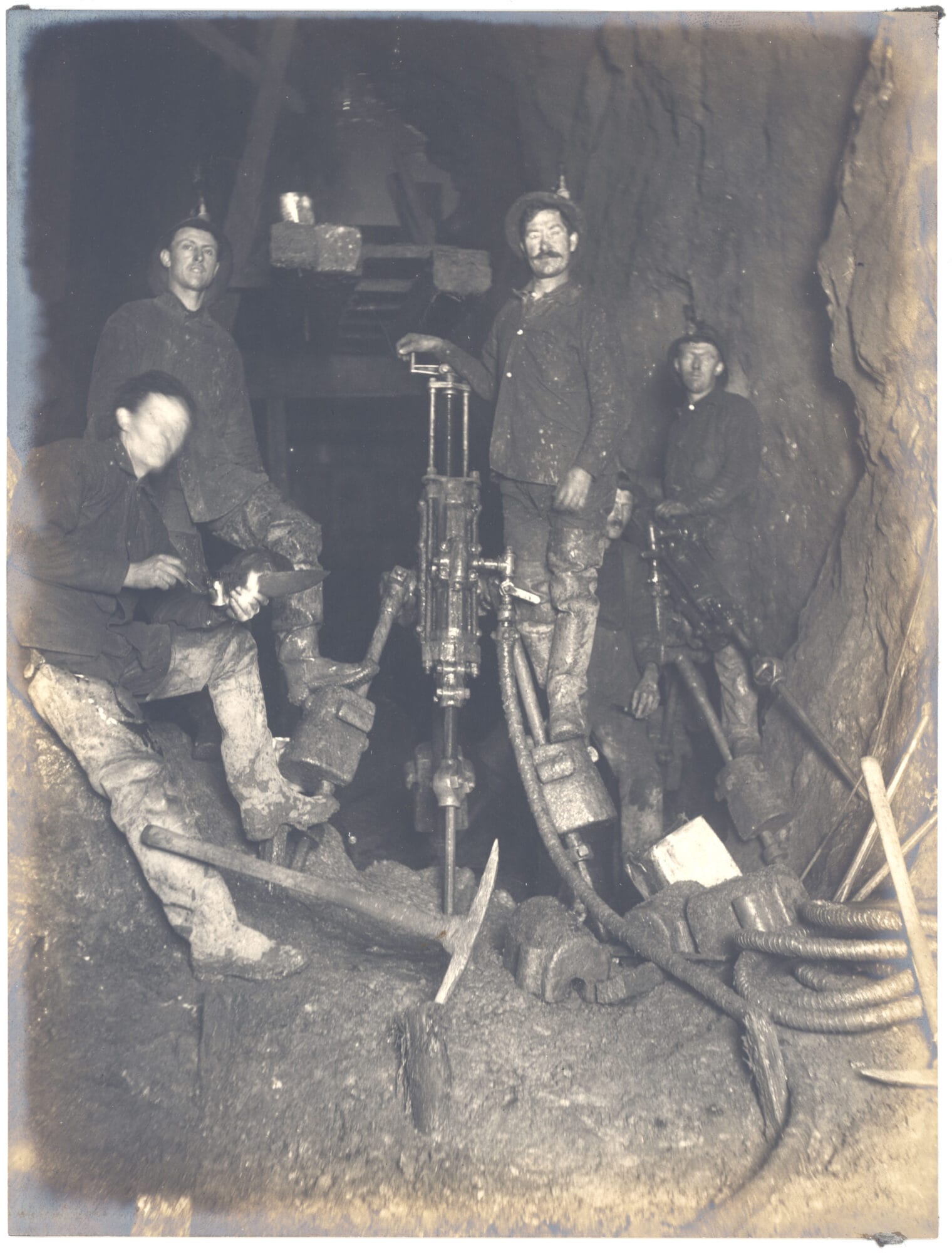
The mountains surrounding the upper Snoqualmie Valley attracted prospectors searching for gold, silver, copper, lead, iron, and other minerals. Mining districts developed in the eastern part of King County, including areas associated with the Snoqualmie Valley and its tributaries.
Mining was difficult and often dangerous. Remote claims could be many miles from the nearest road or railroad, requiring pack animals, trails, tramways, and eventually narrow-gauge railroads to move workers, equipment, and ore.
Some mines attracted outside investors and employed substantial work crews. Others never became commercially successful.
Mining ultimately had a smaller and more temporary impact on the Valley than the timber industry, but it contributed to the region’s early reputation as a place rich in natural resources.
Harnessing the Power of Snoqualmie Falls
Perhaps the Valley’s most remarkable industrial resource was one that had been there all along: water.
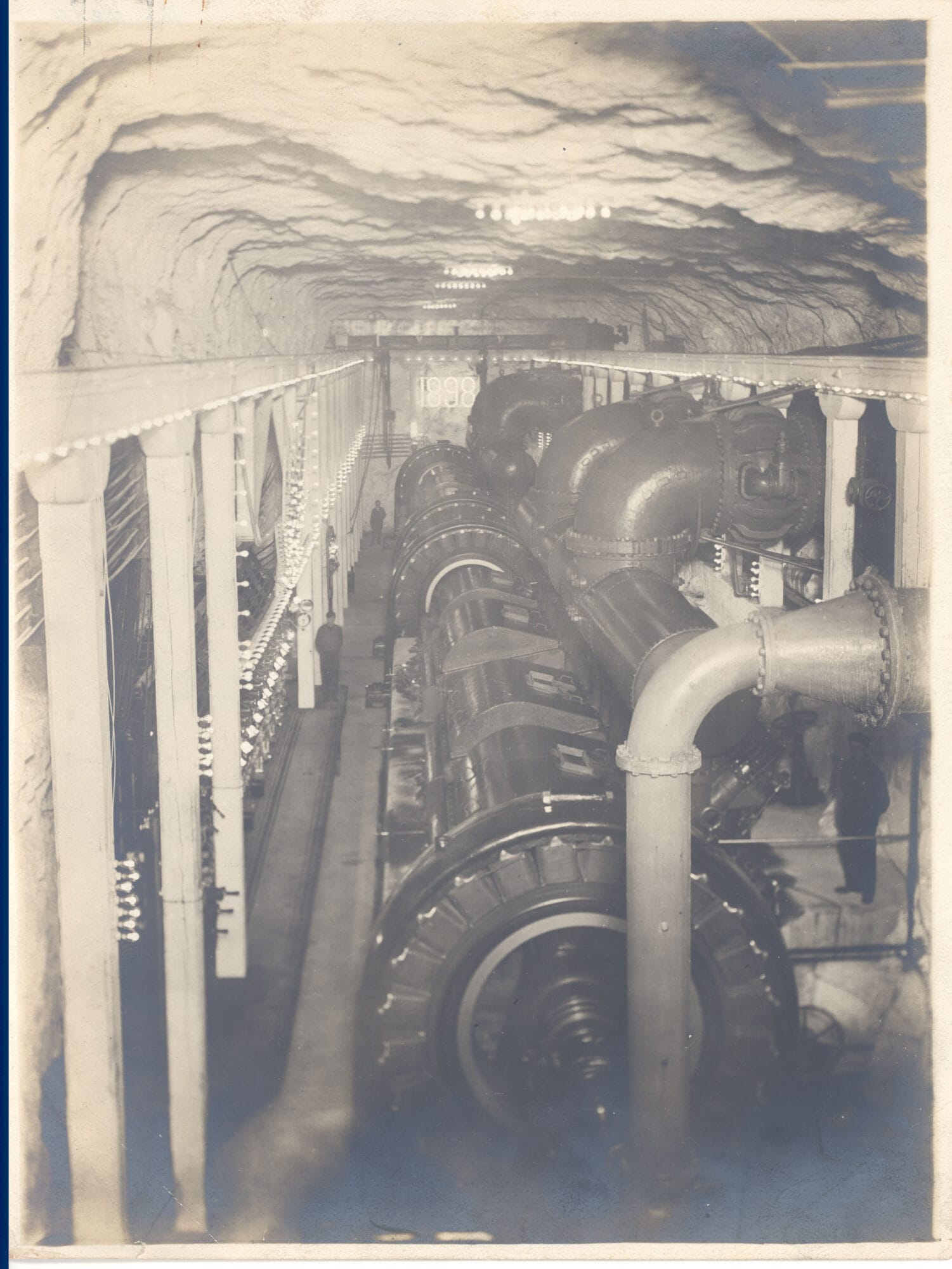
In the 1890s, engineer Charles Baker developed an ambitious plan to harness Snoqualmie Falls (a sacred site for the Snoqualmie Tribe and other Coast Salish Peoples) for hydroelectric power. The resulting power plant became the first large underground hydroelectric facility in the region.
Electricity generated at Snoqualmie Falls was transmitted to Seattle and Tacoma, where it powered streetcars and a variety of industries while also damaging this sacred site.
The project also created local jobs and a small community for workers near the Falls. A second powerhouse was added in 1911 as the operation expanded.
For the first time, the Snoqualmie Valley was not simply exporting raw materials. Its natural resources were being transformed into something entirely new: electricity.
The Snoqualmie Falls Lumber Company
The Valley’s timber industry reached a new scale in the years just before World War I.
Weyerhaeuser Timber Company and Grandin Coast Lumber Company joined their extensive timber holdings to create the Snoqualmie Falls Lumber Company. In 1916, construction began on two large mills across the river from Snoqualmie, along with a company town for workers.
The mills were designed to process enormous Douglas fir, western hemlock, and western redcedar trees. An extensive network of logging railroads carried timber from the surrounding mountains to the mills.
The company town included housing, a store, a hotel and boarding facilities, and other services needed by a large industrial workforce.
When the mill began operating in 1917, it became one of the Valley’s most important employers.
World War I immediately increased demand for wood products. Spruce was needed for airplanes, and other lumber products were essential to the war effort. Labor shortages also changed the workforce. Japanese workers were recruited to help construct logging railroads, and women took some jobs traditionally held by men.
The mill and the surrounding company town fundamentally changed the Snoqualmie Valley economy.
Industry Creates Communities

Industrial development did not simply create jobs. It created communities.
Workers needed houses, stores, schools, churches, hotels, restaurants, transportation, and entertainment. Towns such as Snoqualmie and North Bend grew as transportation and industry expanded.
The railroad brought new businesses and residents. The power plant created a community at the Falls. The lumber mill created an entire company town across the river from Snoqualmie.
Downtown Snoqualmie grew alongside the lumber industry, dairying, tourism, and transportation. Many of the brick and masonry buildings that still characterize the historic downtown date from the prosperous years after the lumber mill opened.
Industry and community development were inseparable.
Weathering Hard Times
The industrial economy faced serious challenges during the twentieth century.
The Great Depression brought falling wages and slowed construction, but the Snoqualmie Falls Lumber Company continued operating.
World War II brought renewed demand for lumber, followed by a postwar building boom. In 1959, a new Weyerhaeuser plywood plant further extended the Valley’s connection to the timber industry.
At the same time, transportation was changing. Automobiles and highways increasingly replaced railroads for passengers and freight. The construction of U.S. 10—and later Interstate 90—changed the economic relationship between the Valley’s towns and the outside world.
Over time, the large logging camps and company towns disappeared, and much of the Valley’s industrial economy declined or changed form.
A Landscape Shaped by Industry
The Snoqualmie Valley’s industrial history is still visible all around us.
Railroad depots and tracks, historic downtown buildings, mill sites, logging roads, power facilities, company-town remnants, and surviving industrial structures remind us of an era when the Valley’s economy depended heavily on extracting and processing its natural resources.
But industry left another legacy.
The roads, railroads, towns, electrical systems, and jobs these industries created helped transform the Snoqualmie Valley from a remote rural region into a connected community.
The forests and rivers that first attracted settlers became the foundation of an industrial economy—and that economy, in turn, helped create the communities we know today.
From the small water-powered mill on Tokul Creek to the enormous Snoqualmie Falls Lumber Company, and from mining camps in the mountains to the generators beneath Snoqualmie Falls, the Valley’s industrial history is ultimately a story about people learning to harness the extraordinary resources around them.
[Featured Image PO-320-22- Olympian Train by Cedar Falls Depot- Holzman- Railroad Depot]



Comments
NICELY DONE!
Requires repeating as newer residents move in.